Why Regular Semi Truck Maintenance Matters
Keeping a fleet of semi trucks properly maintained is essential for improving safety, reliability, and overall efficiency in the transportation industry. Commercial trucks operate under demanding conditions every day, which means regular maintenance is necessary to prevent breakdowns, reduce downtime, and extend the lifespan of each vehicle.
Routine inspections and servicing help identify small mechanical issues before they turn into major and expensive repairs. A well-maintained truck is also safer to operate, lowering the risk of accidents caused by mechanical failures. For fleet managers and logistics companies, consistent maintenance plays a major role in meeting delivery schedules, reducing operational costs, and maximizing the return on investment for every truck in the fleet.
Preventive Truck Maintenance Strategies
Preventive maintenance is one of the most effective ways to keep semi trucks operating efficiently. Instead of waiting for components to fail, preventive maintenance focuses on regular inspections and scheduled servicing to avoid unexpected problems.
Some of the most important maintenance tasks include oil and filter changes, tire rotations, brake inspections, and checking fluid levels. Monitoring belts, hoses, batteries, and suspension components is also critical for maintaining overall truck performance.
Sticking to a scheduled maintenance plan helps improve fuel efficiency and ensures that trucks remain compliant with safety regulations and industry standards. In many cases, preventive maintenance can save companies significant amounts of money by reducing emergency repairs and minimizing vehicle downtime.
Let us help restore your truck’s performance. Contact our team today for professional assistance.
Essential Tools and Equipment for Truck Maintenance
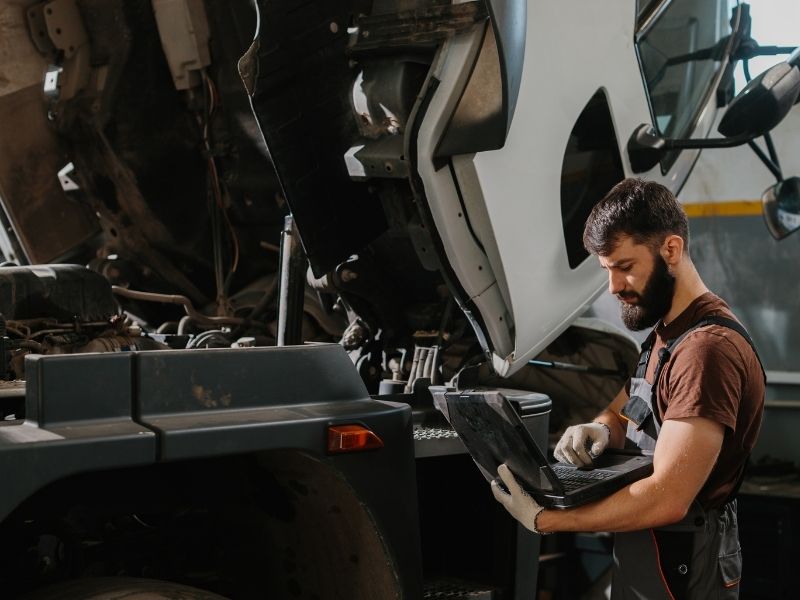
Having the right tools and equipment is a key part of effective semi truck maintenance and repair. Diagnostic scanners are essential for identifying engine and electrical system issues quickly and accurately. Hydraulic jacks and lifting equipment are also necessary for safely servicing heavy-duty vehicles.
Other important tools include torque wrenches, brake bleeding equipment, tire pressure gauges, and fluid testing tools. Keeping replacement parts such as filters, belts, hoses, and brake components readily available can also help speed up common repairs and reduce delays.
Investing in high-quality tools not only improves maintenance efficiency but also helps ensure repairs are completed correctly, contributing to the long-term reliability of the fleet.
Common Semi Truck Repairs
Due to the demanding nature of commercial trucking, certain repairs are more common than others. Brake system repairs are among the most frequent because brakes experience constant stress during operation. Replacing brake pads, repairing air leaks, and inspecting brake lines are all routine maintenance procedures.
Engine-related repairs are also common and may involve coolant leaks, turbocharger issues, or fuel injection system problems. Transmission repairs, including fluid leaks and shifting problems, can occur over time as trucks accumulate mileage.
Tire wear is another major concern for heavy-duty trucks because large loads place significant stress on tires. Regular tire inspections and replacements help improve safety and fuel efficiency. Electrical system issues, such as faulty wiring, battery failures, or lighting problems, should also be addressed promptly to ensure reliable truck operation.
Our experienced team is fully trained to help solve any truck issue quickly and efficiently. Contact us today!
Building an Effective Truck Maintenance Checklist
Creating a detailed truck maintenance checklist helps ensure that no important service task is overlooked. Organizing maintenance tasks by frequency can make fleet management more efficient and consistent.
Daily inspections should include checking tire pressure, fluid levels, lights, and visible signs of damage. Weekly maintenance may involve inspecting brakes, hoses, belts, and battery connections. Monthly inspections should cover more detailed checks such as tire rotations, suspension inspections, and electrical system testing.
Seasonal or quarterly maintenance tasks often include oil changes, filter replacements, wheel alignments, and full engine inspections. Following a structured checklist allows fleet managers and drivers to identify problems early, improve vehicle reliability, and reduce the likelihood of costly breakdowns.
By implementing a strong maintenance program and staying proactive with repairs, trucking companies can improve safety, extend vehicle lifespan, and keep their operations running smoothly year-round.
If you want more details you can visit our GMB Profile .
Call us for truck repair road service here . We are in Florida, Texas and Georgia. Open 24/7.